Why a coolcation in Spain?
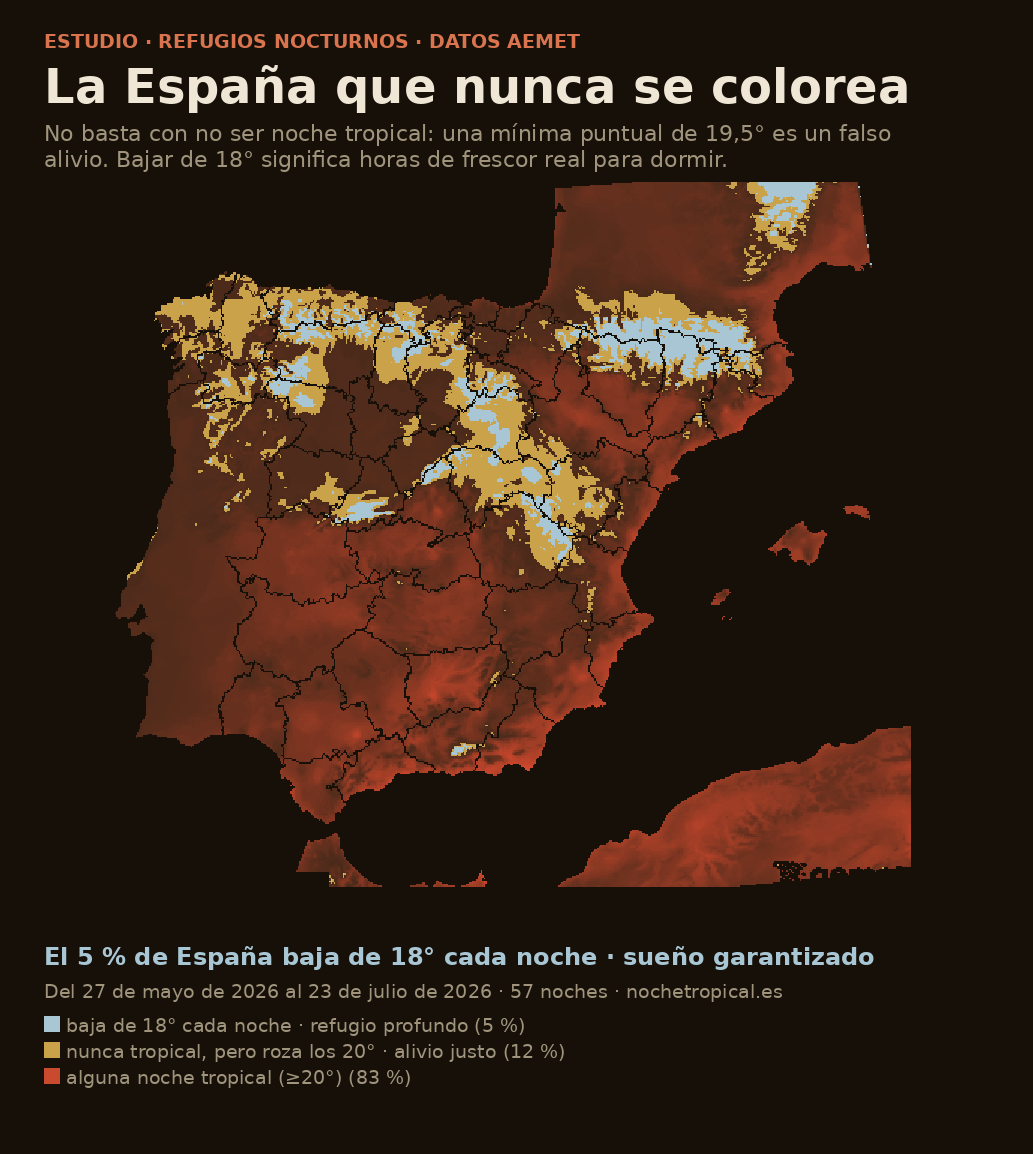
Spain is famous for sun and beaches — and infamous, in August, for nights you cannot sleep through. But the country is not one climate: an hour inland and a few hundred metres up, the air changes completely. In the high sierras the temperature plunges after dark, and you sleep under a blanket while the coast swelters. That is a coolcation: choosing your destination for the cool, not the heat.
How we measure it
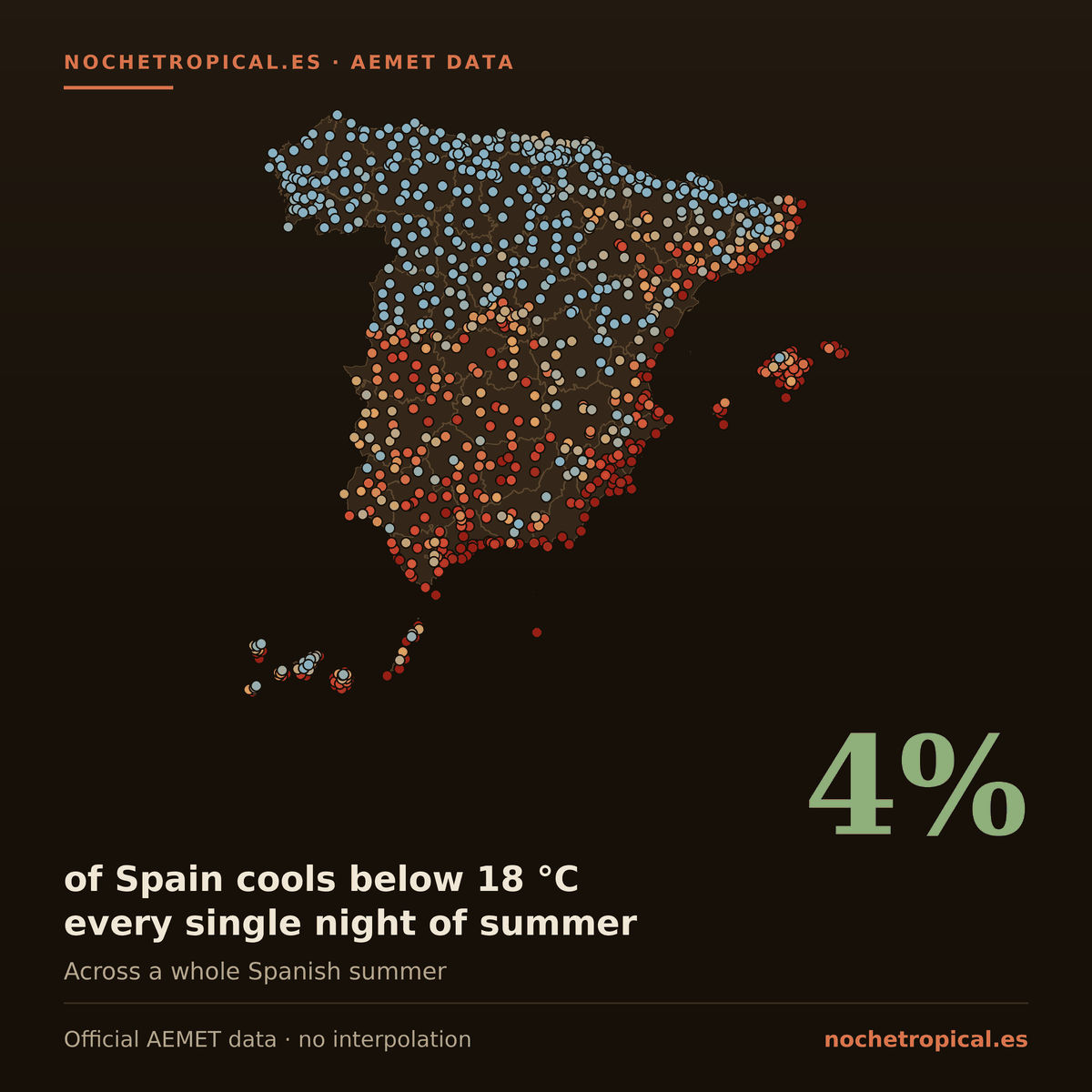
We count tropical nights — nights that never drop below 20 °C — at 848 AEMET weather stations across the summers of 2017–2026. We do not use averages, which hide the heat spikes; we use honest thresholds and worst-case streaks. A town with almost zero tropical nights is a place where you can genuinely sleep in summer, no air conditioning required.
What is a coolcation?
A coolcation is a holiday chosen for its cool climate rather than sun and beach — escaping the summer heat instead of chasing it. In Spain that means the mountain interior, where nights stay fresh even in August.
Where in Spain can you sleep without air conditioning in summer?
In the highland interior, roughly 600–1,700 m above sea level: the Pyrenees, the Sierra de Gúdar in Teruel, the Gredos and Guadarrama ranges, the Cantabrian Mountains, Sanabria and the Soria highlands. These towns barely record a single tropical night per year.
What is a tropical night?
A tropical night is one where the temperature never drops below 20 °C. The more tropical nights a place has, the harder it is to sleep. The Mediterranean coast can string together 80+ in a row; the mountain interior often has none.
Is the data reliable?
Yes. Everything comes from AEMET, Spain's national meteorological agency, using the summers of 2017–2026. It is open, free of cookies and fully reproducible — the code that builds this site is public.